
Study in UK
Shorter degree durations, globally recognised universities, and a clear post-study work route, ideal for students seeking faster outcomes with strong international value.
- Home
- Study in UK

Study In UK
Dreaming of Studying in the UK?
- Home to 160+ world-recognised universities, including Oxford, Cambridge, and Imperial College London
- 1-year Master’s programs save time and money compared to other countries
- Up to 2 years post-study work visa (Graduate Route) for international students
- English-speaking environment, globally transferable degrees
- Scholarships and bursaries available for Indian and international students
Education
Education System in UK
The UK education system is one of the most respected in the world — known for its academic rigor, innovation, and a strong focus on employability. From short, intensive Master’s degrees to research-led Ph.D. programs, the UK offers flexible academic structures that allow you to specialise early and graduate faster.
Master’s degrees in the U.K. usually take 1 year (full-time), offering a faster and more cost-effective route. Students can choose between taught programs (like MSc, MA, MBA), which combine coursework and a dissertation, or research-focused options (like MRes, MPhil). STEM graduates may also benefit from extended visa routes or work sponsorship opportunities.Popular Fields: Business, Finance, Data Science, Public Health, Marketing, Cybersecurity, Renewable Energy
PhD programs in the U.K. typically last 3–4 years and focus on independent, original research under the guidance of academic supervisors. They are often supported through research council funding, scholarships, or teaching assistantships.Popular Fields: Ranges from Arts & Humanities to Advanced Sciences and Interdisciplinary Research
Undergraduate degrees in the U.K. typically last 3 years (4 in Scotland), with students specializing from the first year—ideal for those with clear career goals. Many universities also offer sandwich programs, which include an optional placement or internship year for practical industry experience.Popular Fields: Business, Law, Computer Science, Engineering, Psychology, International Relations
Types of Higher Education Institutions in the UK
Elite research-intensive universities like Oxford, Cambridge, LSE, and UCL
Career-focused, known for industry partnerships and applied learning
Focused on areas like art, music, design, business, or agriculture
Offer vocational programs and foundation degrees
Credit System & Evaluation
- UK degrees follow a modular credit-based system
- Undergraduate programs usually require 360 credits (120 per academic year) Assessment is typically through essays, presentations, practicals, and final exams
- Grading follows classifications like First Class, Upper Second (2:1), Lower Second (2:2), etc.
Intakes in UK
Flexible Start Dates. Multiple Opportunities to Begin Your Journey
UK universities offer multiple intakes throughout the year — giving international students more flexibility to plan their application timelines and align with personal, academic, or financial readiness.
Here’s a detailed look at the major UK intakes:
(September/October)
Most popular and widely available across all levels (Bachelor’s, Master’s, PhD). Offers the highest number of courses and scholarships. Strong internship and job prospects.
(January/February)
Available for select programs, especially Master’s. Ideal if you missed the September cycle. Slightly fewer scholarships and course options, but still valuable.
(May)
Limited availability, usually for Business, Computing, or short-term/pre-sessional programs. Ideal for students seeking faster entry or flexible visa timelines..
- Start Early: Apply 6–9 months before your target intake for better chances at scholarships and top programs
- September Intake = Maximum Opportunity: If possible, aim for this to maximize course, funding, and internship availability January is Growing: More universities are opening up Jan intakes in high-demand fields like Data Science, Healthcare, and Business
- May Intake Is Strategic: Perfect for students who want to avoid long waiting periods or are switching careers
Still unsure which intake fits you best?
Let’s help you make an informed decision based on your academic readiness, visa processing time, and personal goals.
Courses
Popular Courses and Top Universities to Study in the UK
Globally Ranked Programs. Industry-Aligned Curricula. Career-Ready Graduates.
The UK’s education system is known for its academic rigour, global recognition, and employment focus. Whether you’re aiming for a world-class university like Oxford or a career-focused modern institution, the UK offers unmatched options across disciplines.
Popular Courses Among International Students
UK institutions offer thousands of programs, but here are the most in-demand courses among international students — chosen for career potential, research output, and global recognition:
The UK is home to top-ranked business schools like London Business School, Warwick, and Oxford Saïd. Programs emphasize leadership, entrepreneurship, finance, and global strategy — often with internships and placement years built in. Popular Job Roles: Business Analyst, Financial Consultant, Marketing Manager, Operations Head Top Employers: Barclays, PwC, EY, Deloitte, HSBC
British universities are at the forefront of engineering innovation. Courses combine theoretical foundations with lab work and real-world applications — especially strong in areas like sustainable energy and transportation. Popular Job Roles: Design Engineer, Structural Engineer, Electrical Systems Engineer Top Employers: Rolls-Royce, BAE Systems, Arup, Siemens
British universities are at the forefront of engineering innovation. Courses combine theoretical foundations with lab work and real-world applications — especially strong in areas like sustainable energy and transportation. Popular Job Roles: Design Engineer, Structural Engineer, Electrical Systems Engineer Top Employers: Rolls-Royce, BAE Systems, Arup, Siemens
With top-tier universities and close ties to NHS research hospitals, the UK is a great choice for Biomedical Sciences, Public Health, Nursing, and Pharmacy. Programs often include practical placements and eligibility for further licensure pathways. Popular Job Roles:Lab Technician, Public Health Specialist, Biotech Researcher Top Employers: NHS, GlaxoSmithKline, Novartis, WHO Collaborating Centres
UK law degrees (LLB or LLM) are highly respected, especially for students planning to work in Commonwealth countries. The UK is also a hotspot for global diplomacy and international policy studies. Popular Job Roles:Legal Advisor, Policy Analyst, Corporate Lawyer Top Employers: Clifford Chance, British Council, United Nations, Linklaters
The UK is a global hub for creative industries — from fashion and animation to journalism and UX design. Programs are hands-on and encourage building real-world portfolios. Popular Job Roles: Fashion Designer, Animator, Film Editor, Art Director Top Employers: BBC, Vogue, Saatchi & Saatchi, Penguin Books
With the data revolution across all industries, UK universities have rapidly expanded offerings in Data Science, Machine Learning, and Business Analytics. Many programs are STEM-designated with post-study work opportunities. Popular Job Roles: Data Analyst, Machine Learning Engineer, Business Intelligence Lead Top Employers: Deloitte, Capgemini, AstraZeneca, Tesco Analytics
Top Universities in the UK for International Students
Here’s a curated list of high-ranking UK universities known for academic excellence and international student support:

Law, Politics, Philosophy, Medical Sciences

Engineering, Mathematics, Literature, Natural Sciences

Known for medicine, law, and multicultural academic excellence.

Economics, International Relations, Business
Architecture, Life Sciences, Arts & Humanities
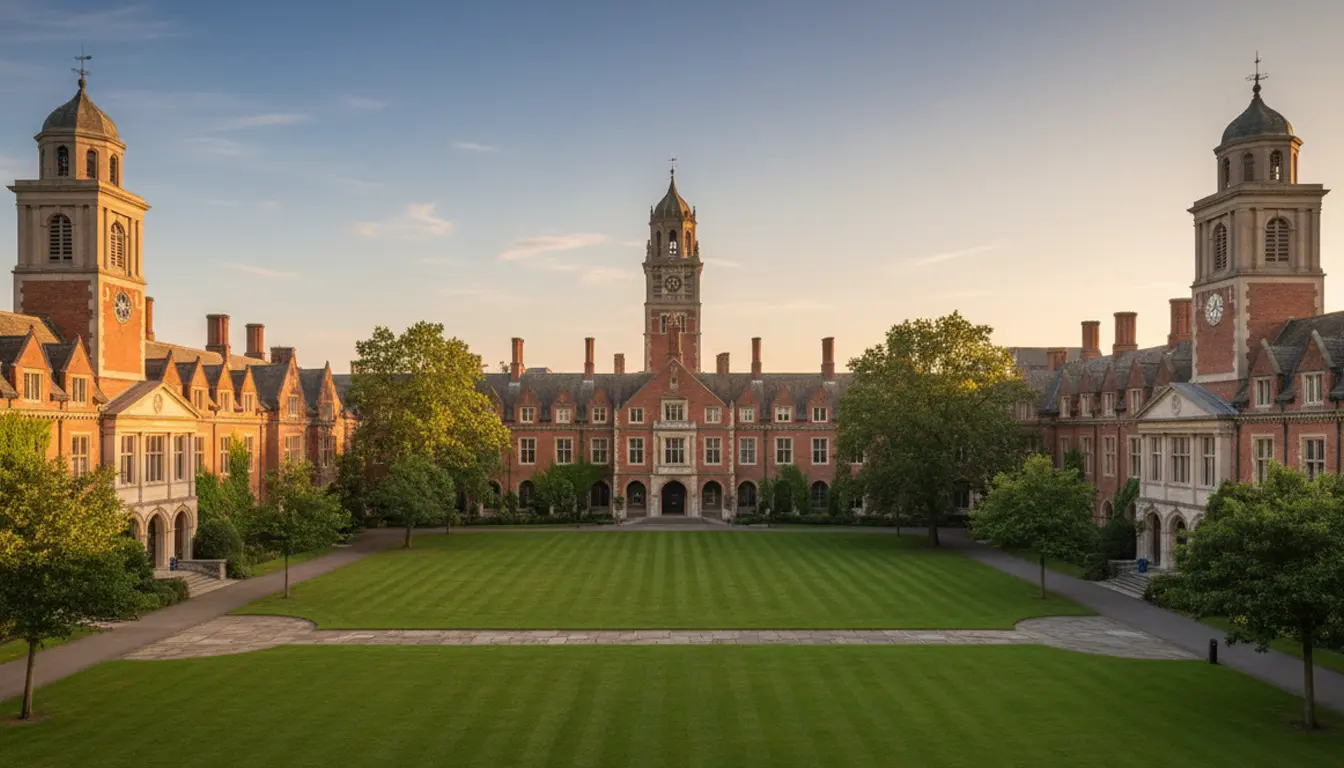
- Rankings matter, but career outcomes, course structure, and city lifestyle are equally important
- Many top UK universities offer foundation or pre-master’s programs if you don’t meet direct entry requirements
- Look for Graduate Route eligibility to ensure post-study work rights
Still unsure
which course or university fits you best?
Use Our Country Match Quiz or Request a Callback and we’ll help shortlist based on your goals, budget, and background.
Finance
Tuition Fees and Cost of Living to Study in the UK
World-Class Education That Fits a Range of Budgets — with Smart Planning and Support.
The UK offers globally respected degrees and high employability, but costs can vary widely depending on the university, city, and lifestyle. With the right financial planning and support from The Study Connect, a UK education is more accessible than you think.
Tuition Fees
(Annual Average)
UK tuition is typically charged per year, and rates differ based on course level, institution type, and subject. Here’s a general breakdown:
£10,000 – £15,000
(Average Annual Tuition in GBP)
₹10 – ₹15 lakhs
(Approx. in INR)
£12,000 – £25,000
(Average Annual Tuition)
₹12 – ₹25 lakhs
(Approx. in INR)
£14,000 – £30,000
(Average Annual Tuition)
₹14 – ₹30 lakhs
(Approx. in INR)
£25,000 – £45,000
(Average Annual Tuition)
₹25 – ₹45 lakhs
(Approx. in INR)
£16,000 – £30,000
(Average Annual Tuition)
₹16 – ₹30 lakhs (some waived)
(Approx. in INR)
Living Expenses (Monthly Averages)
Living costs depend on the city (London vs. smaller towns), accommodation type, and personal spending habits.
Here’s what you can expect on average:
£400 – £900
(Average Monthly Cost)
₹40,000 – ₹90,000
(Approx. in INR)
£150 – £300
(Average Monthly Cost)
₹15,000 – ₹30,000
(Approx. in INR)
£80 – £200
(Average Monthly Cost)
₹8,000 – ₹20,000
(Approx. in INR)
~£50/month
(Average Monthly Cost)
~₹5,000 (included in visa fee)
(Approx. in INR)
Estimated Annual Living Cost: £10,000 – £15,000 → ₹10 – ₹15 lakhs
Additional One-Time Costs
£490
(Estimated Cost)
₹50,000
(Approx. in INR)
£776/year
(Estimated Cost)
~₹80,000/year
(Approx. in INR)
£400 – £700
(Estimated Cost)
₹40,000 – ₹70,000
(Approx. in INR)
£300 – £500/year
(Estimated Cost)
₹30K – ₹50K
(Approx. in INR)
Not Sure How It All Adds Up?
Personalised by city, course, and accommodation type.
Prefer a counselor to walk you through your budget and scholarship planning?
Let’s build a financial plan you feel confident about.
Scholarship
Scholarships for Studying in the UK
World-Class Education Doesn’t Have to Break the Bank. There’s Help Available.
Studying in the UK can be a big financial commitment — but scholarships, bursaries, and grants can significantly reduce the burden. With early planning, a strong application, and expert guidance, you can unlock opportunities that cover partial or even full costs.
Types of Scholarships Available
Who It’s For
Students with strong academic scores, standardized test results, or achievements
Who It’s For
Applicants from lower-income backgrounds demonstrating financial need
Who It’s For
Students applying for fields like STEM, Business, or Humanities
Who It’s For
Offered by UK institutions as part of the admission process
Who It’s For
Sponsored by UK government (e.g., Chevening, GREAT)
Who It’s For
From international bodies, corporates, or foundations
Pro Tip: Many UK universities automatically consider international students for entry-level scholarships. But some need separate applications — with essays and supporting documents.
Popular UK Scholarships for Indian & International Students
(Offered By)
UK Government
Full tuition, living allowance, flights, and more
(Offered By)
UK Government
Full or partial funding for PG and PhD students
(Offered By)
British Council + UK Universities
£10,000 towards tuition for select PG programs
(Offered By)
Rhodes Trust
Full funding for select master’s/PhD at Oxford
(Offered By)
University of Cambridge
Full tuition + stipend for PhD students
(Offered By)
University of Edinburgh
Tuition waivers and merit-based awards
(Offered By)
Varies (e.g., Bristol, Warwick)
£2,000 – £10,000 depending on course and profile
Why Choose Us
How The Study Connect Supports Your Scholarship Journey
- Identify relevant scholarships based on your program, background, and goals
- Guide you in drafting compelling essays, SOPs, and financial statements
- Assist in organizing documents like transcripts, income proofs, and references
- Track deadlines and ensure on-time submission across multiple universities
- Share curated lists of scholarship options per intake and course level
Trusted by world-class universities



Earning Opportunities
Work Opportunities for Students Want to Study in the UK
Earn While You Learn. Build Experience. Unlock Post-Study Careers.
The UK doesn’t just offer world-class education — it also provides excellent opportunities for international students to gain professional work experience, manage living expenses, and even build a career pathway after graduation.
Whether you’re looking for a part-time job during your studies or planning to work full-time after graduation, understanding UK’s work regulations can help you make the most of your time abroad.
Part-Time Work During Studies
International students with a valid Tier 4 or Student Route visa are permitted to work during their studies, subject to certain conditions.
Up to 20 hours per week during term time; full-time during holidays
Must be enrolled in a full-time degree at a recognized UK institution
On-campus roles, retail, hospitality, admin, internships, freelance (within rules)
Self-employment, business, or full-time permanent jobs during term time
Up to 20 hours per week during term time; full-time during holidays
Must be enrolled in a full-time degree at a recognized UK institution
On-campus roles, retail, hospitality, admin, internships, freelance (within rules)
Self-employment, business, or full-time permanent jobs during term time
Where Can You Work?
Library assistant, IT lab support, student ambassador
Retail, cafes, call centres, admin support
Program-integrated paid placements or summer internships
Design, tutoring, content creation — permitted under certain rules
Some degrees come with a mandatory placement year — giving you 9–12 months of full-time work experience before graduation.
Average Student Earnings
£9 – £12/hour
£720 – £960/month
£12 – £18/hour
£960 – £1,440/month
£1,000 – £1,800/month (full-time)
Depends on program & employer
Many students use this income to support living expenses like groceries, transport, and part of their rent.
Requirements for Working While Studying
To work legally in the UK as an international student, you must:
- Have a valid Student Route (formerly Tier 4) visa
- Be enrolled in a recognized full-time course at a licensed institution
- Work only within the allowed hours and categories
- Ensure your job does not interfere with your academic performance
Post-Study Work Opportunities in the UK
Graduate Route typically involves Stay and Work in the UK After Studies
After completing your course, the Graduate Visa (Post-Study Work Visa) allows you to stay in the UK and work without sponsorship.
(Post-Study Work Duration)
Up to 2 years
(Post-Study Work Duration)
Up to 3 years
No restrictions on job type or employer.
Gives you time to find skilled employment or switch to a work visa (e.g., Skilled Worker Visa)
In-Demand Job Sectors in the UK
Software Engineer, AI Developer, Data Analyst
Analyst, Consultant, Auditor
Clinical Researcher, Public Health Assistant
Civil, Mechanical, Electrical Engineers
Graphic Designer, Animator, Media Producer
Research Assistant, Lab Tech, Teaching Assistant
Need Help Navigating Your Work Rights in the UK?
Whether it’s understanding visa conditions, preparing your CV for UK employers, or applying for post-study work visas — The Study Connect team can guide you every step of the way.
How to apply
Application Process for Studying in the UK
From University Shortlist to Visa Stamp — Step-by-Step Support for Every Stage
Applying to UK universities isn’t just about filling out forms — it’s a strategic process involving program shortlisting, document preparation, financial planning, and visa approvals. At The Study Connect, we guide you through every step to ensure nothing gets missed.
Here’s what a typical application journey looks like:
1. Research & Shortlisting
- Explore different types of institutions: Russell Group, modern universities, pathway colleges
- Understand entry requirements for your chosen level (UG/PG)
- Use tools like The Study Connect’s Country Match Quiz to explore best-fit options
- Decide on preferred intake (January, May, or September) and program duration
Our counsellors help you compare course modules, employability outcomes, city costs, and more — so you don’t just apply blindly.
2. Prepare Required Documents
- Collect academic transcripts (10th, 12th, and degree) for eligibility verification.
- Keep a valid passport ready for identity and visa processing.
- Take an approved English test (IELTS, TOEFL, or PTE) — most universities require a 6.0–6.5 band score.
- Write a strong Statement of Purpose (SOP) to highlight your goals and motivation.
- Obtain Letters of Recommendation (LORs) from teachers, professors, or employers.
- Prepare an updated resume or CV for postgraduate or professional courses.
- Include a portfolio, if applying for design, art, or architecture programs.
Don’t stress about format or tone — we help you edit, proofread, and polish every document to UK university standards.
3. Submit Applications
- Review course deadlines — some fill early (esp. healthcare & MBA)
- Fill out the application forms carefully, adhering to specific requirements
- Upload documents and SOPs as per each university’s portal
- Pay application fees (usually £20–£50, but many waive for early applicants)
- Track application status and respond to university follow-ups
The Study Connect keeps a live tracker so you know where every application stands.
4. Receive Offer Letter
- Conditional Offer: May require final academic results, IELTS score, or other documents
- Unconditional Offer: Meets all entry conditions — ready to move to visa stage
- Confirm your seat by paying the enrollment deposit (typically £1,000–£5,000)
Our team helps you evaluate multiple offers and make the best choice — based on ranking, affordability, visa success rates, and more.
5. Financial Preparation & CAS Letter
- Paid deposit (as requested by the university)
- Proof of sufficient funds for tuition + 9 months living costs
- Bank statements or education loan approval, dated within the past 28 days
- If sponsored — include an Affidavit of Support or financial letter
- Estimate your living costs:
6.Apply for UK Student Visa
(Tier 4)
- Pay the IHS (Immigration Health Surcharge) — £776/year for outside London or £1,035/year for London (subject to updates).
- Gain full access to NHS healthcare during your studies.
- Fill the Visa Application Form on the UKVI website.
- Double-check your passport and CAS details before submitting.
- Pay the Visa Application Fee — £490 (as of 2025).
- Book your Biometric Appointment (VFS).
- Attend biometrics and submit all required documents (passport, CAS, bank proofs, etc.).
- Wait for your visa decision — 3 weeks for standard processing, or 5–7 working days with the priority option.
We offer full visa documentation review, mock interviews (if applicable), and help you avoid technical errors that could cause delays.
7. Plan for Departure
- Book your flight — you can arrive up to 1 month before your course start date (as per visa rules).
- Arrange accommodation — secure temporary or long-term housing before arrival.
- Review your health coverage — IHS provides NHS access, but you can add private insurance if needed.
- Prepare a document folder — include your passport, visa, CAS, proof of funds, and transcripts.
- Pack smart — carry essential clothes, chargers, prescriptions, utensils, and adapters.
- Set up UK SIM & essential apps — pre-activated SIM, maps, transport, and NHS access apps.
- Attend university orientation — join online or in-person welcome sessions to settle in smoothly.
The Study Connect offers pre-departure webinars and personalized checklists — so you land in the UK with clarity and confidence.
Need Help Navigating Your Application?
and speak with our expert who can guide you step-by-step.
How we help
How The Study Connect Helps
with Your UK Application
Simplified, Structured, and Supported — Every Step of the Way.
Here’s how we guide you through every milestone of your UK education journey:
We don’t hand you a generic list — we handpick courses that suit your academic background, future goals, location preferences, and financial capacity.
- Compare between Russell Group vs. Modern (OTHER) Universities
- Tailor choices based on employability, cost, and visa success rate
- Consider alternate intakes to avoid missing deadlines
Support
- Brainstorm impactful stories, motivations, and goals
- Polish your resume for postgraduate or job-linked courses
- Edit, proofread, and align with UK expectations (tone, structure, format)
Management
- Direct university application support (no third-party platforms)
- Documentation uploads, fee payments, and interview scheduling
- Shared tracker to monitor all applications in one place
Assistance
- Identify scholarships based on your course, background, and achievements
- Guide you in drafting scholarship essays or financial need documents
- Assist with fee waivers, CAS deposits, and early bird discounts
Documentation
- Bank statement format and maturity date compliance
- Affidavits, sponsor letters, and education loan letters
- Full review of your CAS, visa application, and supporting documents
Guidance
- Mock visa interviews tailored to UK study scenarios
- Step-by-step help with IHS (Immigration Health Surcharge) and visa fees
- Appointment booking and document upload support via VFS Global
Support
- Guidance on what to pack, what to leave, and how to manage your first month
- Housing assistance (temporary or permanent) near your university
- Arrival checklists, NHS registration, student bank accounts, and more
Always.
- 1:1 WhatsApp and call-based communication
- Shared progress trackers and regular follow-ups
- Emergency support and reminders for every critical milestone
Thousands Have Done It With Our Help.
You Can Too.
Want to simplify your UK study plans, reduce stress, and maximize success?
and let’s plan your journey — together.
How we help
Frequently Asked Questions
Studying in UK
We’ve answered thousands of questions from students just like you. Here are some of the most common ones — with clear, no-fluff answers.
1. What are the basic requirements to study in Canada?
- A valid passport
- Proof of acceptance from a Designated Learning Institution (DLI)
- Proof of funds (tuition + living expenses)
- English proficiency test scores (IELTS/TOEFL)
- A well-written SOP and academic transcripts
- A valid study permit (visa)
2. Can I study in Canada without IELTS?
3. How much bank balance is required for a Canadian study visa?
- CAD 10,000 in a Guaranteed Investment Certificate (GIC)
- Proof of first-year tuition payment
- Additional funds if your living expenses exceed CAD 10,000
4. How long does the Canada student visa process take?
To study in Canada as an international student, you typically need:
- A valid passport
- Proof of acceptance from a Designated Learning Institution (DLI)
- Proof of funds (tuition + living expenses)
- English proficiency test scores (IELTS/TOEFL)
- A well-written SOP and academic transcripts
- A valid study permit (visa)
5. Can I bring my spouse or dependents while studying?
- Your spouse may be eligible for an open work permit
- You may apply for dependent visas for children
Each case is unique, so it’s important to evaluate eligibility beforehand.
6. Are scholarships available for Indian students in Canada?
- Vanier Canada Graduate Scholarships
- University-specific entrance awards
- Province-specific funding schemes
We help you shortlist scholarships based on your profile.